

Home / Jamilah Jewels Blog | Moissanite, Jewelry Guides and Buying Advice / What Is VVS Moissanite? D-Color and Clarity Explained
What Is VVS Moissanite? D-Color and Clarity Explained
July 23, 2026

If you have shopped for moissanite anywhere, you have seen the same two letters and one letter repeated on almost every listing: VVS, and D-color. They are usually printed without explanation, as though everyone already knows what they mean.
They are worth understanding, because they describe two different things, they come from somewhere specific, and they matter a great deal on some pieces and almost not at all on others.
The short answer
VVS is a clarity grade. It means very, very slightly included: the stone has internal marks so small that a trained grader struggles to find them under 10x magnification, which means you will never see them with your eyes. D-color is a color grade. It means colorless, with no yellow, brown or gray tint at all. A stone described as D-color VVS is both: clean and colorless. That is the icy white look most people picture when they imagine a high-end stone.
The important nuance, and the one most listings leave out, is where those grades come from and who assigns them. That is covered below.
What VVS stands for
VVS is short for Very, Very Slightly Included. An inclusion is any internal feature inside a stone: a tiny crystal, a feather, a pinpoint, a faint line of growth. Every gemstone has some. Clarity grading is the practice of describing how many there are, how big they are, where they sit, and how easily a trained person can find them under a 10x loupe.
The scale that VVS belongs to is the GIA clarity scale, which runs from Flawless at the top down to Included at the bottom. GIA describes the very, very slightly included grades as having "inclusions so slight they are difficult for a skilled grader" to see under 10x magnification. That is the whole definition, and it is a demanding one: the reference point is a professional with a loupe, not a shopper holding the piece at arm's length.
| Grade | Meaning | Eye clean? |
|---|---|---|
| FL, IF | Flawless, internally flawless | Yes |
| VVS1, VVS2 | Very, very slightly included | Yes |
| VS1, VS2 | Very slightly included | Yes |
| SI1, SI2 | Slightly included | Usually |
| I1 to I3 | Included | Often not |
Two things follow from that table. The first is that VVS sits near the top but is not the top. The second, and the more useful one, is that the practical difference between VVS and VS is invisible without magnification. Both look clean. What you are buying at VVS is headroom, not a look you could pick out in a lineup.
Where these grades come from, and what that means for moissanite
Here is the part worth knowing before you compare two listings.
The D-to-Z color scale and the Flawless-to-Included clarity scale are diamond scales. GIA built them for diamonds and introduced the color scale in 1953, starting deliberately at D rather than A so it would not be confused with the various systems in use before it. GIA's own grading reports state their scope plainly: they are issued for loose, natural D-to-Z color diamonds. Moissanite is a different mineral, silicon carbide, and it is not graded on those reports.
So when a moissanite is sold as D-color VVS1, the seller is borrowing diamond vocabulary to describe a stone the diamond scale was never written for. That is not dishonest, and it is now standard across the whole moissanite industry, because the words communicate quickly and there is no widely adopted alternative. But it does have two real consequences for you as a buyer.
- The grade is assigned by the manufacturer or the seller, not by an independent diamond laboratory. Two suppliers can apply the same words with different strictness.
- It means the grade is a description of quality intent, not a certificate. Treat it as a useful signal from a brand you trust, and judge the actual piece on what you can see.
Anyone who tells you their moissanite carries a GIA color and clarity grade is describing something that is not offered. If you want independent paperwork on a moissanite, what exists is an identification report confirming the material, not a 4Cs grade. We are open about this because the alternative is letting a reader assume a certificate exists behind a number on a product page. If you want to see how the same question plays out on a specific product type, our guide to what the VVS grade actually buys you on a chain takes it further.
What D-color means
Color is graded on a separate scale from clarity, and it measures the absence of tint rather than the absence of inclusions. It runs from D at the top to Z at the bottom, where Z is a light yellow, brown or gray.
| Range | Grades | How it reads |
|---|---|---|
| Colorless | D, E, F | No tint you can see |
| Near colorless | G to J | Faint warmth in some light |
| Faint | K to M | A visible warm tone |
D is the top grade: fully colorless. In practice, D, E and F are close enough that most people cannot separate them once a stone is set in metal, because the metal around it influences how the stone reads. A stone in a warm yellow finish will always look a little warmer than the same stone in white.
Color is also the grade that becomes more visible as stones get larger. A 3mm stone shows very little of its own body color no matter what it is graded. A large center stone shows considerably more, which is why color grade earns its keep on a ring and matters less on a row of small stones.
VVS1 versus VVS2: can you see the difference?
No. Not with your eyes, and usually not with a loupe unless you know exactly what you are looking for.
VVS1 and VVS2 are two halves of the same grade. The distinction is about how hard the inclusions are to find and where they sit: a VVS1 stone's marks are typically harder to spot, often near the edge rather than under the table. A VVS2 stone's marks are marginally easier for a grader to locate. Both are eye clean by definition, and once a stone is set in metal and worn, the difference disappears entirely.
If you are choosing between two pieces and one says VVS1 and one says VVS2, choose on the thing you can actually see: the cut, the setting, the metal and the size. Those decide how the piece looks on you. The half-grade does not.
What the grade actually changes about how a stone looks
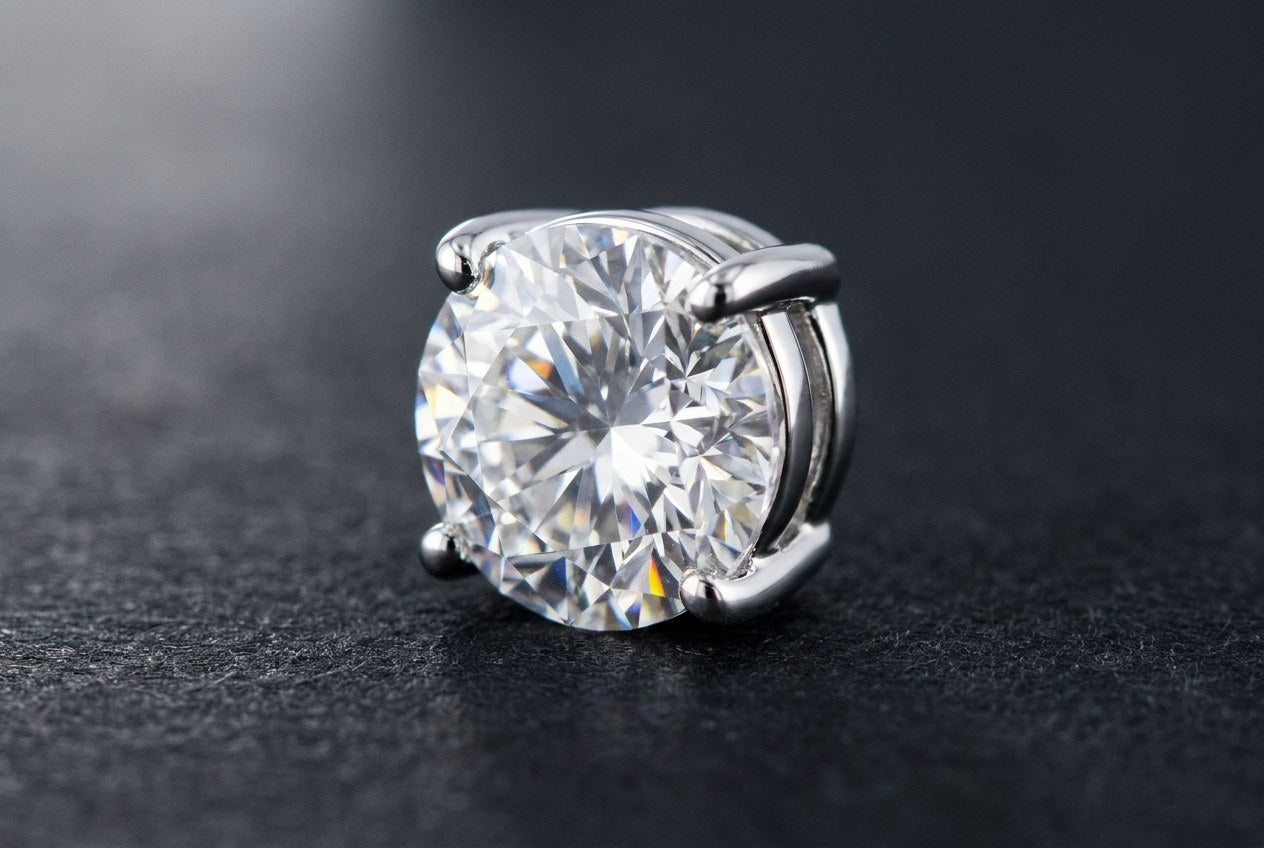
A clean, colorless stone gives you the brightest possible white light return, because nothing inside is scattering light and nothing in the body of the stone is warming it. That is the whole practical payoff, and it is real.
What the grade does not do is create sparkle. Sparkle comes from cut. Moissanite has a higher refractive index than diamond and a much higher dispersion, which is why it throws noticeably more colored flashes, what jewelers call fire. That is a property of the material and the way it is faceted, not of its clarity grade. A beautifully cut VS stone will outshine a badly cut VVS stone every time. If you want the longer version of how moissanite's optics compare, read moissanite vs diamond, and if you are choosing a shape, which moissanite cut suits your hand covers that decision.
One more thing the grade does not do: it does not predict how the stone ages. Moissanite does not cloud, fade or go dull, at any clarity grade, because the material itself does not degrade. What people mistake for clouding is almost always a film of product and skin oil on the underside of the stone. We wrote about that separately in does moissanite get cloudy.
What the grade does not tell you
A grade describes one stone. Most jewelry contains many. That gap is where a lot of disappointing pieces live.
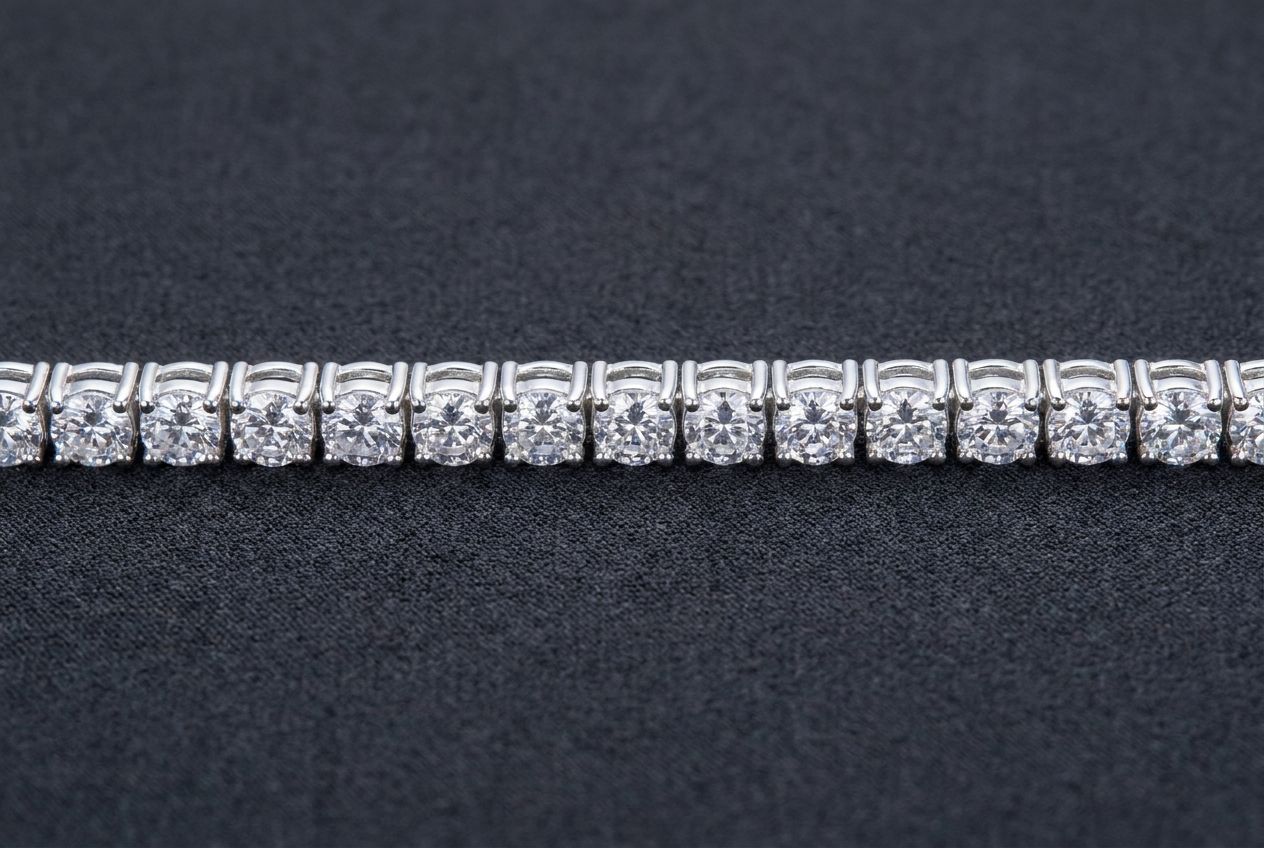
- Consistency. On a tennis chain, bracelet or cluster earring, the thing your eye judges is whether every stone matches its neighbors in size, color and how it is seated. One stone set slightly low or slightly warm is far more visible than any clarity grade.
- The setting. Prongs that are even, tight and the same height across a row are what make a piece look expensive. Glue, uneven prongs and visible gaps are what make it look cheap. Our guide to what makes iced-out jewelry look real goes through the tells in detail.
- The metal underneath. A high-grade stone set in a mystery base metal is a short-lived piece. What the stone sits in decides whether the piece survives daily wear.
- Size. Grades say nothing about scale, and moissanite is usually listed in millimeters rather than carats because it is lighter than diamond at the same size. Our moissanite mm to carat guide converts between the two.
Where the grade matters most, and where it matters least
This is the part worth applying when you shop.
It matters most on a single large stone. A solitaire ring or a large pendant center stone gives your eye one thing to look at, in good light, from close range. Body color shows. Any inclusion large enough to catch light shows. This is where a colorless, clean stone genuinely earns the description.
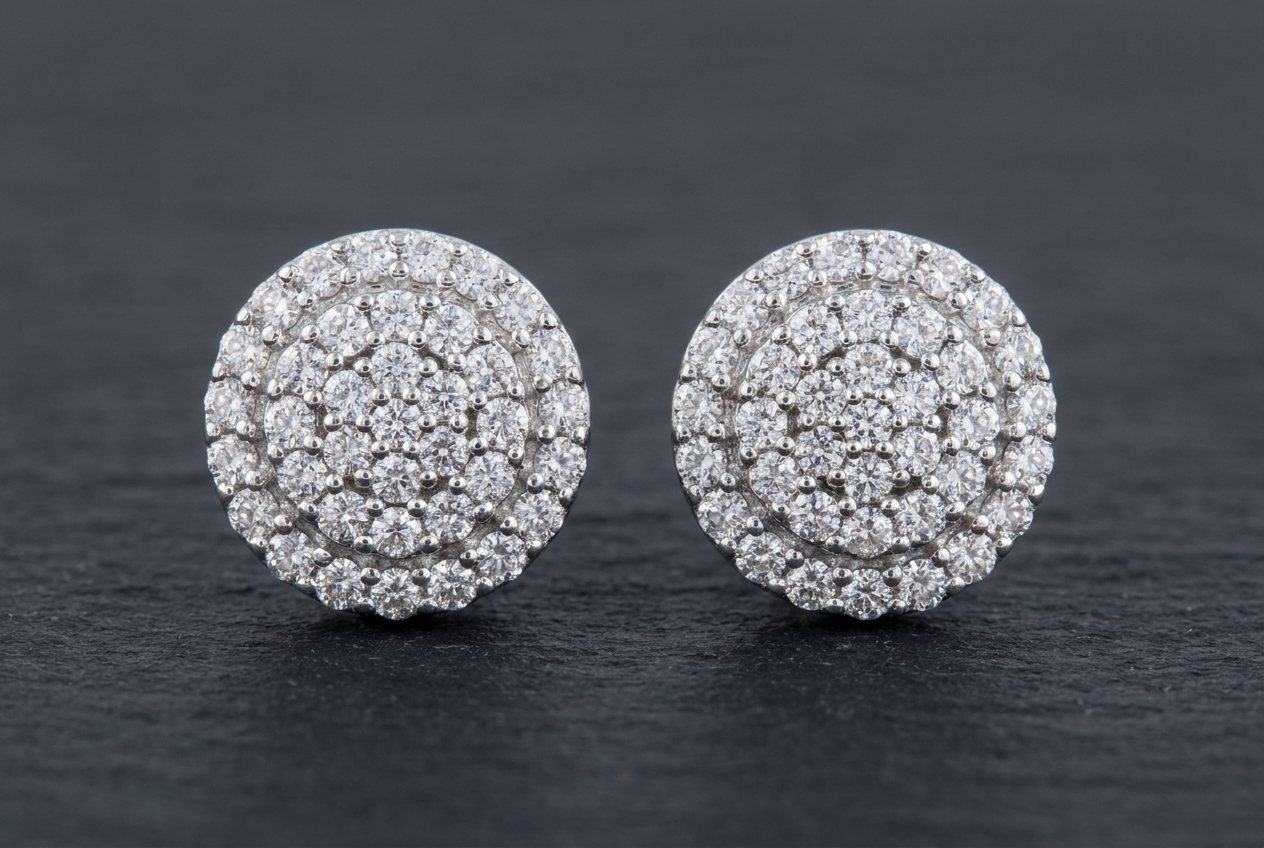
It matters least on many small stones. On cluster earrings, a tennis bracelet or a tennis chain, no single stone is large enough to display its own color or clarity to the naked eye. What you see is the aggregate: the brightness of the row and how evenly it reads. That is decided by matching and setting quality, which is why we hold the grade constant across the collection rather than treating it as a feature to trade off.
It matters differently by metal. A colorless stone in a bright white setting looks its coldest and iciest. The same stone in a yellow or rose finish picks up warmth from the metal around it, which many people prefer. Neither is better; they are two different looks, and the grade is the same in both.
How to read a moissanite listing
- Color: D to F is colorless. Anything in that band will look white to you.
- Clarity: VVS or VS both look clean to the eye. Do not pay a large premium to move within that range.
- Cut: the grade that actually decides how much light comes back. A well-cut stone beats a higher-graded, poorly-cut one.
- Size in millimeters: more useful than a carat figure on moissanite, because the stone is lighter than diamond at the same diameter.
- The metal: ask what is under the finish, not just what color the finish is.
- Who assigned the grade: if a seller implies independent diamond certification on a moissanite, that is a reason to ask more questions.
If the reason you are asking about grades in the first place is price, the honest explanation of why a clean colorless moissanite costs what it does is in why moissanite is so cheap. And if you are wondering whether a grade helps a stone pass a jeweler's test, that is a separate question with a separate answer: does moissanite pass a diamond tester.
What we set in Jamilah Jewels pieces
Our ready-to-wear collection is set with VVS moissanite, lab created and cut for brilliance. Our FAQ states it directly: the stones are a genuine gemstone rather than cubic zirconia, and if you want to know how those two materials differ over a year of wear, we compared them in moissanite vs cubic zirconia.
Every piece is built on solid .925 sterling silver, including earring posts and backs. Gold and rose gold colorways are plated over that same solid sterling base. We publish that rather than leaving it vague, because the metal under a stone matters as much as the grade on it.
We also stand behind the setting itself. Our lifetime guarantee covers stone loss under normal wear, setting or prong failure and clasp failure, and it carries a verification promise: every ready-to-wear piece is exactly what its product page says it is, with a full refund if it is ever not the stated material. That promise is the part of a grade claim that should carry weight, because it is the part a brand can actually be held to.
Frequently asked questions
Is VVS moissanite worth it?
For an eye-clean stone with no visible marks, yes. Paying a large premium to move from VS to VVS is harder to justify, because both are eye clean and the difference only exists under magnification. Spend the difference on cut quality, stone size or the metal instead.
What is the difference between VVS1 and VVS2?
They are two halves of the same clarity grade. VVS1 inclusions are typically harder for a grader to find than VVS2 inclusions. Both are invisible to the naked eye, and once a stone is set the distinction has no practical effect on how the piece looks.
Is D-color better than VVS?
They measure different things and cannot be ranked against each other. D is a color grade meaning colorless. VVS is a clarity grade meaning very, very slightly included. D-color VVS means a stone is both colorless and clean.
Is moissanite graded by GIA?
Not on the D-to-Z color and Flawless-to-Included clarity scales. Those are diamond scales, and GIA issues its 4Cs grading reports for natural diamonds. Moissanite grades are assigned by the manufacturer or seller using that same vocabulary, which is standard practice across the industry but is not the same as independent certification.
Can you see the difference between VVS and VS moissanite?
Not with the naked eye. Both grades are eye clean by definition. The difference is visible only to a trained grader using 10x magnification, and even then it takes deliberate searching.
Does a higher clarity grade make moissanite sparkle more?
No. Sparkle comes from cut. Moissanite's fire comes from the material's high refractive index and dispersion, and how well the stone is faceted decides how much light comes back to your eye. A well-cut stone at a lower grade will outperform a poorly-cut stone at a higher one.
What does D-color VVS1 mean on a moissanite listing?
It means the seller is describing a stone as colorless and very, very slightly included, using diamond grading vocabulary. Read it as a statement of quality intent from that brand, and judge the actual piece on cut, setting, stone matching and the metal underneath.
The short version
VVS is about clarity, D is about color, and together they describe a stone that is clean and colorless. They are diamond scales applied to moissanite by convention, assigned by the seller rather than by an independent diamond laboratory, which makes the brand behind the claim more important than the letters themselves. Above all, the grade is one input among several, and on most jewelry it is not the one your eye actually judges.
Every ready-to-wear piece we make uses VVS moissanite set in solid .925 sterling silver, with a lifetime guarantee on the stones, settings and clasps. If you want to see what that looks like in a piece where the stones do the work as a group, start with our 9mm cluster earrings at $140, or browse the full earrings collection. For a row you can watch across the light, the 4mm tennis bracelet shows stone matching better than any single stone can. Choosing between earring styles first? Our moissanite earrings buying guide walks through size, stones and backs. Planning something bespoke, in a stone we do not stock ready to wear? Start with a custom design inquiry, or contact us with a question about a specific piece.