

Home / Jamilah Jewels Blog | Moissanite, Jewelry Guides and Buying Advice / What Makes Iced-Out Jewelry Look Real (and What Gives Fakes Away)
What Makes Iced-Out Jewelry Look Real (and What Gives Fakes Away)
August 13, 2026

Iced-out jewelry has a trust problem, and it is mostly the internet's fault. Search the phrase and you will find a hundred pages telling you to breathe on the stones, drop them in water, or scratch them against glass. None of those tests do what people think they do. Meanwhile the things that genuinely separate a piece worth owning from one that falls apart in four months barely get mentioned.
The short answer: real iced-out jewelry is identified by construction, not by the stone. Look at the metal and the setting first. A piece worth buying has an identifiable metal (.925 stamped sterling silver or solid gold), prongs that are even in length and sit flat against every stone, a back that is finished as carefully as the front, and stones that match each other in size, spacing and color. A fake gives itself away with plated base metal, glue instead of prongs, uneven stone spacing, dead or glassy sparkle, and a seller who cannot tell you what the stone or the metal actually is.
That framing matters because "fake" is doing a lot of work in most articles about this, and it usually means the wrong thing. Below is what the word should mean, the tells that hold up, the home tests to ignore, and the questions that settle it before you spend anything.
First, what "fake" actually means
When people ask whether iced-out jewelry is real, they are usually asking one of three different questions. They have very different answers.
- Is the metal what the seller says it is? This is the question that matters most, and it has a hard yes-or-no answer. Sterling silver is 92.5 percent pure silver and is stamped .925. Base metal wearing a thin silver-colored coat is not sterling silver, no matter how it is described in the listing.
- Is the piece well made? Also answerable, by looking closely. Craftsmanship is visible if you know where to point your eyes, and it is the single best predictor of whether a piece survives a year of wear.
- Is the stone a diamond? This is the question everyone asks first and it is the least useful of the three, because most iced-out jewelry has never claimed to be diamond. A lab-grown moissanite is a genuine gemstone in its own right, not a counterfeit diamond. A cubic zirconia is also a real material, just a much softer and shorter-lived one. Neither is fraudulent unless a seller says it is something it is not.
So the honest version of the question is not "are these real diamonds." It is "is this piece made from what the seller claims, and is it made well." Low price alone tells you nothing here, and we walked through exactly why the economics work the way they do in why moissanite costs what it does.
The tells that actually matter
1. The setting, and especially the back
This is the fastest read on any iced-out piece, and almost nobody does it. Turn the piece over.
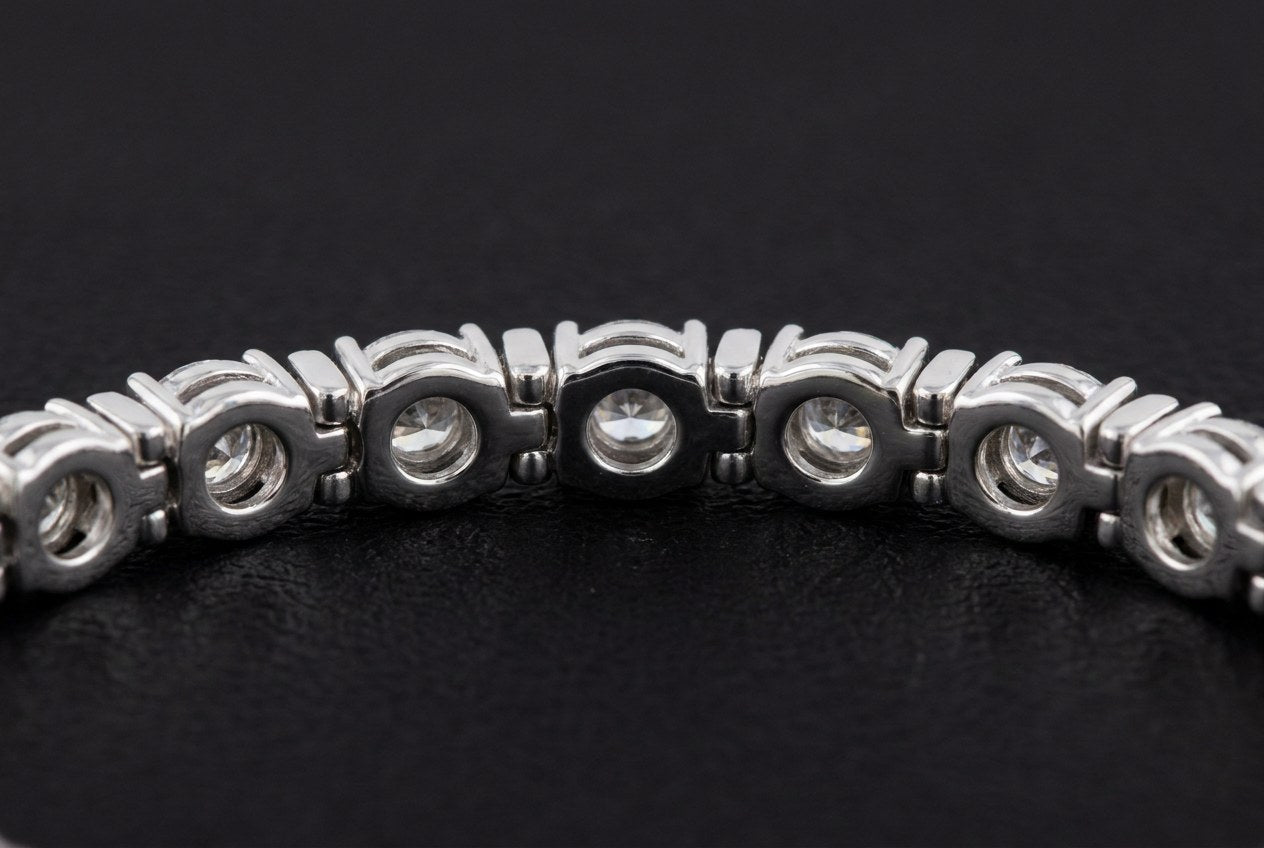
On a well-made chain or bracelet, every stone sits in its own setting, held by prongs that are the same length as each other and pressed flat against the stone. Underneath, each setting has an open window in the metal so light passes through the back of the stone. The International Antique Jewelers Association makes the point that on a really well made piece, the back may be as beautiful as the front, and that hand-cut open backs take a skilled artisan to produce.
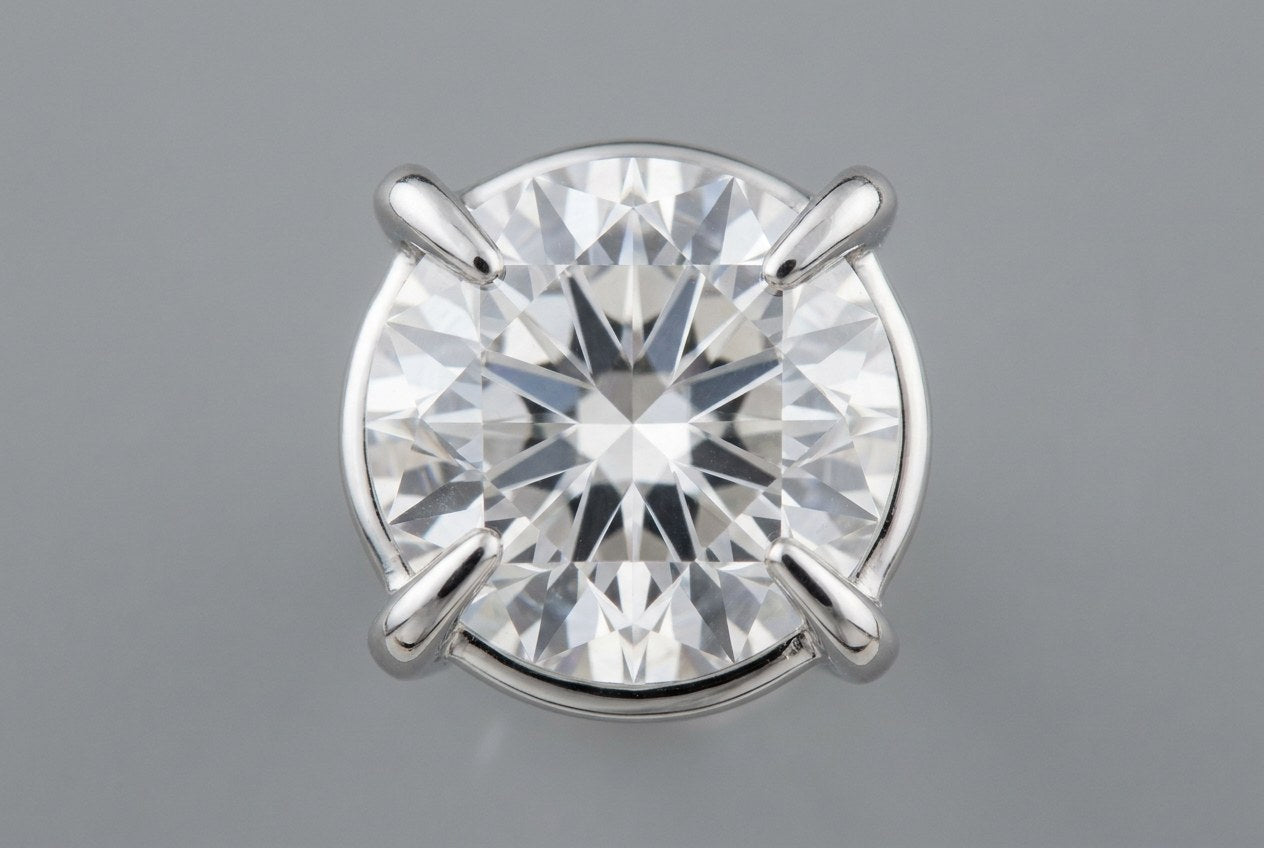
On a poorly made piece, the back is a giveaway. You see solid metal sealed behind every stone, rough solder blobs at the joins, prongs of visibly different lengths, or stones sitting in shallow cups with adhesive around the edge. Glue is the clearest single warning sign in the category. It fails, and when it fails the stones go with it.
2. Stone consistency
Look down the row of a chain or across the face of a cluster earring. In a quality piece the stones are the same size, the same color, and spaced at even intervals, with no metal gaps interrupting the line. Cheap pieces show it immediately: one stone slightly grey next to a bright one, a run of three that sit lower than their neighbors, or spacing that drifts as the row goes on.
This is also where clarity grading becomes practical rather than theoretical. VVS-grade stones look consistent because they were selected to be, and we explain what that grade actually describes in what VVS moissanite means. One thing worth saying plainly: moissanite is generally not certified stone by stone, so a VVS or D-color description on any listing, ours included, is a manufacturer specification rather than an independent per-stone certificate. Any seller claiming a lab certificate for every small stone in a tennis chain is describing something that does not exist at that price.
3. How it throws light
Good stones return light in defined flashes that change as you move. You should see bright white flashes with distinct colored ones mixed in, and the pattern should shift with the smallest tilt.
Two failure modes tell you a stone is not what it should be. The first is a glassy, watery look: light goes in and comes back diffuse, with no crisp facet edges. The second is sparkle that was there when the piece arrived and is not there six months later. That second one is the real difference between materials rather than a manufacturing fault, and it is why cubic zirconia and moissanite diverge so sharply over time. We put them side by side after a year of wear in moissanite vs cubic zirconia.
Be a little suspicious of photography, too. Sparkle in a product photo is a lighting decision. A stone shot under a hard point light will throw far more color than the same stone in a room, so judge fire in a video or in your hand rather than in a hero image.
4. The metal underneath the finish
Almost all iced-out jewelry is silver-based or silver-colored, so this is where description and reality drift furthest apart.
A .925 stamp is the baseline, usually on the clasp, a tag near the clasp, or inside a ring band. Beyond the stamp, weight is the honest signal. Solid sterling has real heft for its size, and a piece that feels light for how big it looks is usually hollow or plated base metal.
Plating deserves a separate note, because plating itself is not a red flag. Gold and rose gold pieces in this category are almost always gold plated over a silver base, and that is normal and disclosed by any honest seller. What matters is what sits under the plating. Gold over solid sterling silver wears down to silver, which is still a precious metal you can re-plate. Gold over brass or zinc wears down to brass or zinc, which discolors and can irritate skin. Same look on day one, very different piece by month six.
Tarnish confuses people here as well. Sterling silver tarnishes. That is chemistry, not a defect, and it polishes off. What should worry you is a piece that changes color unevenly or in patches, or that leaves a green or grey mark on skin, because that points to a base metal underneath a thin coat. Our sterling silver care guide covers the routine version.
5. The clasp and the hardware
The clasp is the part everyone forgets and the part that fails first. On a heavy iced-out chain it carries the entire weight of the piece every time you put it on.
What good looks like: a substantial box clasp or lobster clasp that closes with a definite click, often with a safety catch on a heavier chain, and a spring that feels firm rather than loose. What poor looks like: a small spring ring on a heavy chain, a clasp noticeably lighter than the chain it holds, or jump rings you can pull open with a fingernail. Earrings follow the same logic, and the closure difference is a big enough topic that we gave it its own guide in screw backs vs push backs.
A quick side-by-side
| What to check | Well made | Poorly made |
|---|---|---|
| The back | Open, tidy | Sealed, rough |
| Stone held by | Even prongs | Glue or cups |
| Stone row | Matched, even | Gaps, drift |
| Weight | Solid | Light, hollow |
| Metal mark | .925 stamp | None at all |
| Clasp | Firm, heavy | Thin, loose |
The home tests that do not work
These circulate constantly. They are worth knowing about mainly so you stop relying on them.
- The fog test. Breathe on the stone and time how fast the mist clears. The International Gem Society notes there is no set amount of time a diamond takes to fog up, and that ambient temperature and humidity change the result. It is not a test, it is a coin flip.
- The scratch test. Destructive, and it does not isolate anything. As the IGS puts it, if it scratches corundum, it is diamond, moissanite, or white sapphire. You have damaged your jewelry to narrow the field to three.
- The water test. Cubic zirconia sinks quickly too, so sinking proves very little.
- A basic diamond tester. The most misleading of all, because it appears authoritative. Standard thermal testers read moissanite as diamond, which means a "pass" tells you almost nothing about what you are holding. The full explanation is in does moissanite pass a diamond tester.
The IGS is blunt about the whole category: none of these tests will 100 percent prove that your gem is a diamond, and the only way to be sure is a jeweler or a gem lab. Which is the point. Home tests are a poor substitute for buying from someone who tells you what the piece is before you ask.
What to ask before you buy
Four questions. An honest seller answers all four in seconds, and a vague answer to any of them is your answer.
- What is the metal, exactly? Not "silver." Solid .925 sterling, or plated, and if plated, plated over what.
- What is the stone, exactly? Moissanite, cubic zirconia, lab-grown diamond or natural diamond are four different materials at four different prices. Any seller who will not name the material is the problem.
- How are the stones set? Prong-set or glued. This one question separates most of the market.
- What happens if a stone falls out? The answer reveals how much confidence the seller has in their own construction.
How our pieces answer those questions
Since we just handed you a checklist, here are our own answers to it, all of them stated on the site rather than invented for this article.
Every Jamilah Jewels piece is solid .925 sterling silver, including earring posts and backs. Our FAQ puts it as plainly as we can: no brass, no stainless steel, no mystery base metals. Gold and rose gold pieces are plated over that same solid sterling base, so what wears through is silver rather than brass. The stones are VVS, D-color lab-created moissanite, prong-set rather than glued. The 4mm tennis bracelet is a good example of the construction: a continuous line of round-cut stones in a prong setting on a solid sterling base, in the same 4mm width as the 4mm tennis chain.
On the last question, our Lifetime Guarantee covers stone loss, setting and prong failure, clasp failure, and plating wear from normal wear, with re-plating included. Loss, theft and accident damage are not covered, and tarnish is not treated as a defect because it is normal for silver. That is deliberately specific, because "lifetime warranty" with no detail behind it is itself one of the tells.
If you want to see the construction across a full range of widths and link styles, the tennis chain collection is the place to start, and the wider chains collection includes heavier statement pieces like the Rockstar Crown Spike. For ears, the 9mm cluster earrings show the same prong work at close range, since earrings are the piece people actually see from two feet away.
Frequently asked questions
How can you tell if iced-out jewelry is real?
Check construction before you check the stone. Look for a .925 or gold purity stamp, prongs that are even and pressed flat against each stone, an open and tidy back rather than sealed metal or glue, evenly matched and evenly spaced stones, and a clasp that is as substantial as the chain it holds. A seller who will not name the exact metal and the exact stone is the strongest warning sign of all.
Is moissanite fake?
No. Moissanite is silicon carbide, a genuine gemstone with its own properties, and it measures 9.25 on the Mohs hardness scale against diamond's 10. It is only misrepresented if a seller claims it is a diamond. It is a diamond alternative, not a diamond imitation.
Does cheap iced-out jewelry mean fake?
Not by itself. Price follows the material and the construction, so a moissanite chain in sterling silver is genuinely less expensive than the diamond equivalent without anything being wrong. What should concern you is a piece priced as though it contains diamonds while the seller avoids naming the stone.
Will iced-out jewelry turn my skin green?
Solid sterling silver should not. Green or grey marks usually mean base metal under a thin plated layer, or a reaction with copper in a low-quality alloy. Sterling silver does tarnish over time, but tarnish polishes off and does not stain skin.
Does a diamond tester prove iced-out jewelry is real?
No. A basic thermal diamond tester reads moissanite as diamond, so passing tells you very little. Multi-testers that also measure electrical conductivity separate the two correctly.
Can you tell fake iced-out jewelry from photos?
Partly. Ask for a photo of the back of the piece and a close photo of the clasp. Those two frames show more about build quality than any front-facing hero shot, and a seller who will not send them has told you something.
Buy on construction, not on sparkle
Sparkle is easy to fake for the length of a product photo. Even prongs, a finished back, a clasp with real weight, and a seller who names the material without being pushed are much harder to fake, and they are what you are still wearing in two years. Once you know what the piece is made of, you can go back to the fun part, which is choosing how much of it you want to wear at once. Our iced-out styling guide and our notes on pairing a chain with a pendant pick up from there.
Every piece we make is solid .925 sterling silver set with VVS moissanite, with free insured US shipping, 30-day returns, and a lifetime guarantee behind the setting work. Browse the tennis chains and turn the first one you like over in your hands.