

Home / Jamilah Jewels Blog | Moissanite, Jewelry Guides and Buying Advice / Is Sterling Silver Hypoallergenic? What Sensitive Ears Should Know
Is Sterling Silver Hypoallergenic? What Sensitive Ears Should Know
August 11, 2026

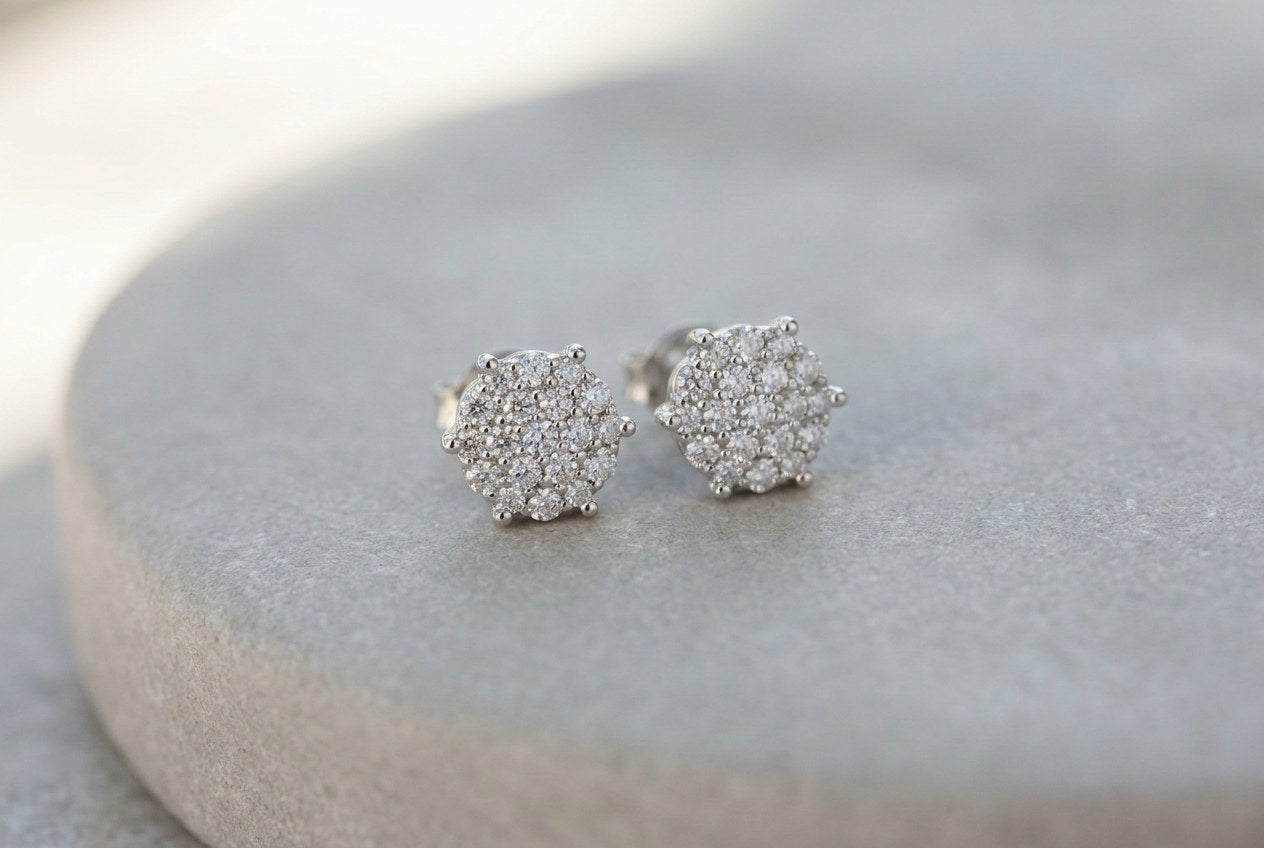
Sterling silver is one of the metals people with sensitive ears tolerate best, but it is not a guarantee, and the word hypoallergenic is doing less work than most jewelry brands want you to think. Here is the honest version: sterling silver is 92.5 percent pure silver and 7.5 percent other metals, and it is that 7.5 percent, plus whatever the earring post is actually made of, that decides how your ears react.
That second half is the part almost nobody explains. This guide covers what sterling silver is made of, why the post matters more than the stone, what nickel has to do with any of it, and the questions worth asking before you buy your next pair of studs.
The short answer
Sterling silver is generally well tolerated by sensitive skin. It is widely used in jewelry for people who react to costume metals, and quality sterling contains no nickel by design. But hypoallergenic is not a regulated, standardized term in jewelry, so it does not certify anything on its own. Two earrings can both be described as hypoallergenic and be built completely differently.
What actually matters is a short list: what the metal is, what the post and back are made of, and whether the piece is plated over something honest or over something cheap.
What hypoallergenic really means on a jewelry listing
Hypoallergenic means, at most, less likely to cause a reaction. It does not mean allergen free, it is not tested to a common standard, and there is no jewelry industry body that audits the claim. A brand can print it on a product page without changing a single thing about the metal.
So the word is not useless, but it is not evidence. Treat it as a starting point, then go looking for the specifics. A brand that can tell you the alloy, the plating, and what the post is made of is telling you something real. A brand that only offers the word is not.
What sterling silver is actually made of
Pure silver is too soft to hold a setting, a clasp, or a prong. It bends, it deforms, and stones fall out of it. So it gets alloyed. Sterling silver is the standard that solved this:
- 92.5 percent pure silver. This is where the .925 stamp comes from, and it is why you see 925 marked on quality silver jewelry.
- 7.5 percent other metals, most commonly copper, added for hardness and structure.
Copper is what makes sterling durable enough to wear daily. It is also the reason silver tarnishes over time, since copper reacts with sulfur compounds in air, sweat, and cosmetics. That is a surface reaction and a polishing cloth reverses it. We wrote about the chemistry and the fix in our sterling silver care guide, and about why we build on this alloy in the first place in why we use .925 sterling silver.
The important point for sensitive ears is what is not in that 7.5 percent. Sterling silver alloy is not built on nickel. That is a meaningful difference from the base metals used in inexpensive fashion earrings.
Where nickel actually shows up in jewelry
Nickel is the metal jewelry regulators pay the most attention to. In the European Union, REACH Annex XVII entry 27 sets specific nickel release limits for jewelry: no more than 0.2 micrograms per square centimeter per week for post assemblies inserted into pierced ears, and no more than 0.5 micrograms per square centimeter per week for items intended for direct and prolonged skin contact, such as earrings, necklaces, bracelets, and rings. Nickel is the only metal singled out that way, which tells you how often it comes up.
There is no equivalent federal release limit in the United States, so American shoppers are relying on what the brand chooses to disclose rather than on a standard being enforced at the border.
In practice, nickel usually reaches your skin through one of three routes:
- Base metal earrings, where brass or a mixed alloy makes up the whole piece.
- Plated costume jewelry, where a thin gold or silver tone coating sits over a nickel bearing base and wears through at the contact points.
- Mismatched posts, where the visible front is decent metal but the post pushed through your ear is not.
That third one is the quiet problem, and it deserves its own section.
The post matters more than the front of the earring
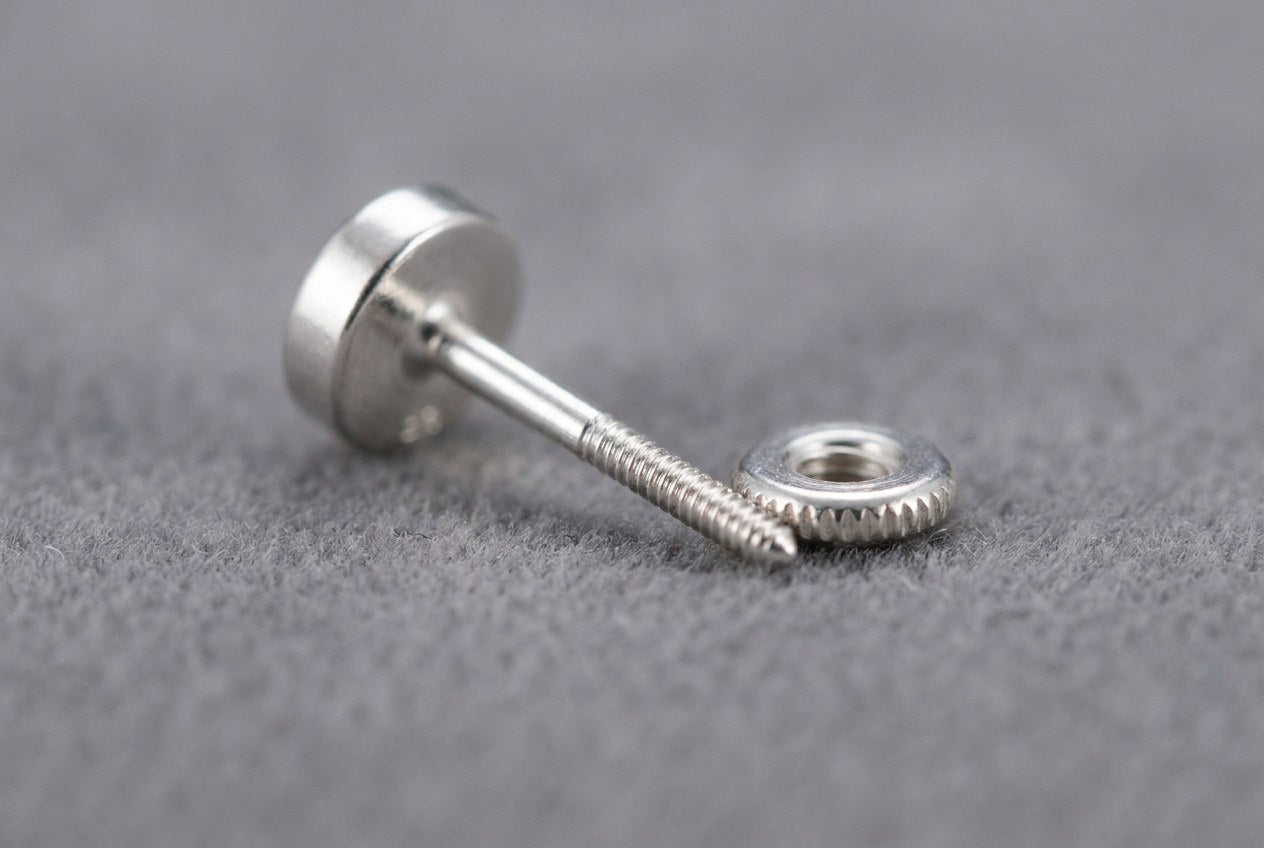
The front of a stud sits against the outside of your earlobe. The post goes through it, and stays there. If any part of an earring is going to cause you trouble, it is the part with the most contact and the least airflow.
Plenty of jewelry is sold as sterling silver where only the visible portion is sterling and the post is a cheaper metal soldered or glued on. It is not usually disclosed, because there is nothing forcing the disclosure. You find out from your ears.
This is why our FAQ answers the metal question the way it does: every piece is built on solid .925 sterling silver, including posts and backs. In the store's own words, no brass, no stainless steel, no mystery base metals. The post that goes through your ear is the same alloy as the piece you can see.
The backing matters for a different reason, which is security rather than comfort. Most of our stud earrings use screw back posts instead of friction push backs, and we broke down the difference in screw backs vs push backs. If you have ever lost an earring in a hoodie, that post is for you.
What about gold and rose gold pieces?
Our gold and rose gold colorways are plated over that same solid sterling silver base. That is worth understanding clearly, because plating is where a lot of jewelry goes wrong for sensitive wearers. When a thin plating sits over a cheap base metal and eventually wears through, the base metal is what your skin meets.
When plating sits over solid sterling, the metal underneath is still sterling. The finish can change color over time with wear, but what is beneath it does not become a different material.
Several of our stud styles also carry a rhodium finish. Rhodium is a platinum group metal used as a bright, hard surface layer, and its practical benefit is that it slows tarnishing considerably. Plating wear from normal wear is covered under our lifetime guarantee, re-plating included, which is worth knowing before you assume a plated piece is disposable.
A practical checklist before you buy
If earrings have given you trouble before, these are the questions that actually separate good pieces from bad ones:
| Ask this | Good answer | Warning sign |
|---|---|---|
| What is the metal? | Solid .925 silver | Silver tone, alloy |
| What is the post? | Same solid .925 | Not stated |
| Plated over what? | Over solid .925 | Over base metal |
| Backs included? | Matching .925 | Generic backs |
| Fix if it fails? | Lifetime cover | 30 days only |
Notice that four of those five questions are about metal you cannot see in the product photo. That is the whole point.
Living with silver day to day
Two habits make the biggest difference, and neither is complicated. First, put jewelry on last and take it off first, so perfume, hairspray, and lotion never get a chance to sit against the metal. Second, keep pieces dry and stored in a pouch or their box rather than loose in a dish.
Sterling silver holds up well to daily wear, and moissanite is hard enough to live in an everyday earring, which we covered in can you wear moissanite every day. Tarnish is not a defect and it is not a reaction. It is a surface film, it comes off with a cloth, and rhodium plating slows it down.
What we can and cannot tell you
We will not tell you that any piece of jewelry is guaranteed to agree with your skin, because no brand can honestly say that. What our FAQ says, and what we stand behind, is this: sterling silver is generally well tolerated by sensitive skin, and if you have a known silver allergy, contact us before ordering and we will advise on options.
If your ears react to jewelry regularly and you do not know why, that is a conversation for a healthcare professional rather than a jewelry blog. What we can do is be exact about what we make things from, which you can read in full on our FAQ page.
Frequently asked questions
Is sterling silver hypoallergenic?
Sterling silver is generally well tolerated by sensitive skin and is a common choice for people who react to costume metals. Hypoallergenic is not a regulated term in jewelry, so it should be read as less likely to cause a reaction rather than as a guarantee.
Does sterling silver contain nickel?
Sterling silver is 92.5 percent pure silver and 7.5 percent other metals, most commonly copper. Nickel is not part of the standard sterling alloy. Nickel more often appears in base metal or plated costume jewelry.
Are Jamilah Jewels earring posts solid sterling silver?
Yes. Every piece is built on solid .925 sterling silver, including posts and backs, with no brass, stainless steel, or mystery base metals. Gold and rose gold colorways are plated over that same solid sterling base.
Can I wear sterling silver earrings every day?
Yes. Sterling silver is alloyed specifically to be durable enough for daily wear. Remove pieces before showering, swimming, or applying perfume and hairspray, store them dry, and polish occasionally with a soft cloth.
Does gold plating change what my skin touches?
On our pieces the plating sits over solid sterling silver, so the metal underneath the finish is still sterling. Plating wear from normal wear is covered under our lifetime guarantee, and re-plating is included.
Where to start
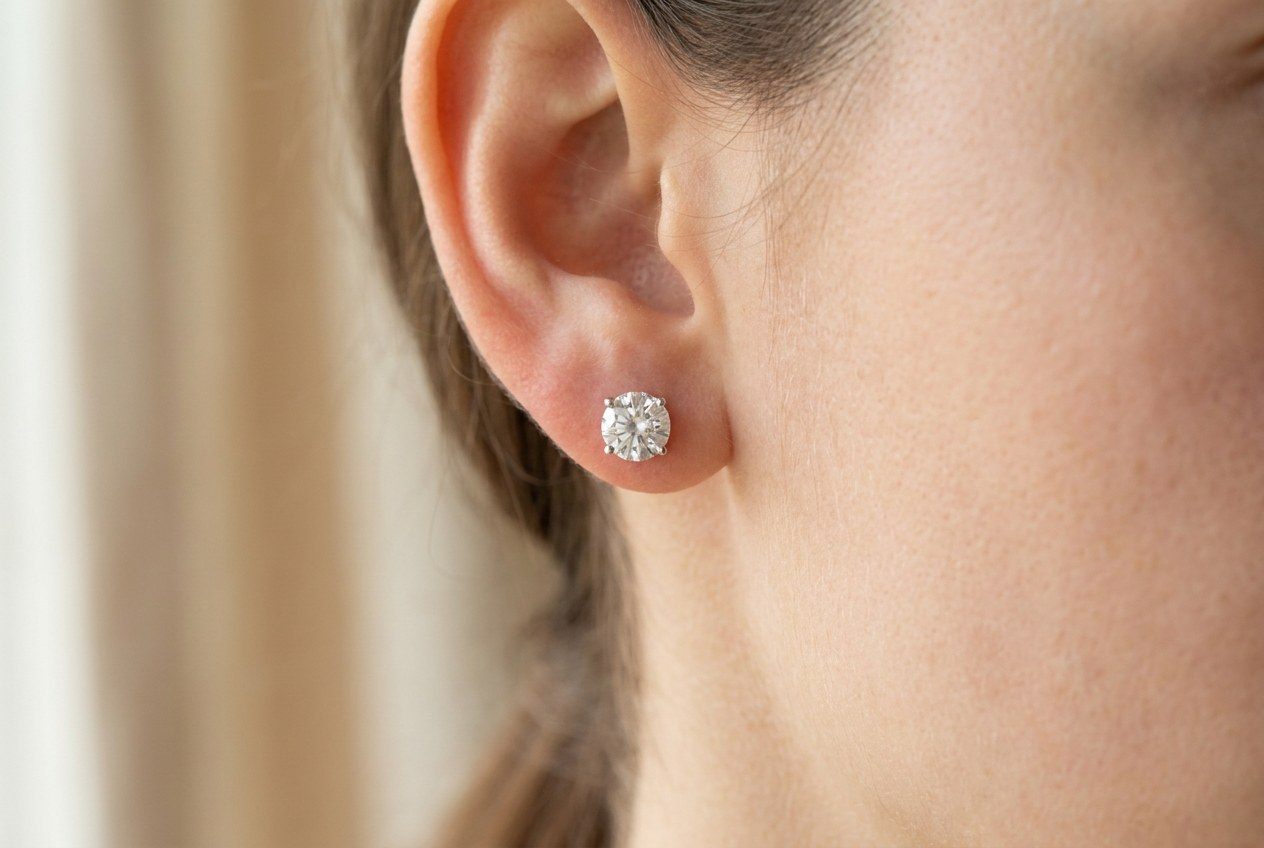
If you are replacing earrings that never quite felt right, start simple and solid rather than large and plated. The Luxe Clover Timeless earrings at $100 are the most affordable way into solid sterling with VVS moissanite, and the Timeless Clover Elegance studs at $150 give you the same construction in a bigger silhouette. If you want the cluster look, the 9mm Luxurious Cluster earrings start at $140 and come in silver, gold, and pink.
All of them are built the same way underneath, which is the only part your ears care about. Browse the full moissanite earrings collection to see the range, and if you have a known allergy, message us first and we will talk it through before you order.