

Home / Jamilah Jewels Blog | Moissanite, Jewelry Guides and Buying Advice / Does Gold Plating Wear Off? What to Expect From Plated Silver
Does Gold Plating Wear Off? What to Expect From Plated Silver
August 19, 2026

Yes, gold plating wears off. It is a surface layer, not part of the metal underneath, so friction will eventually thin it. The useful question is not whether it happens but how long it takes, and that depends far more on which piece you bought than on the plating itself. A gold ring worn every day may show wear at the shank inside a year. A gold pendant on the same finish can look untouched after five.
Here is what plating actually is, how long it realistically lasts by piece type, what strips it fastest, and what happens when it finally goes.
What plating is, in one paragraph
Plating is a microscopically thin coat of one metal bonded onto the surface of another, usually by electroplating: the piece is suspended in a solution and an electric current deposits gold atoms onto it. It is measured in microns. For scale, a sheet of printer paper is roughly 100 microns thick. Plating is normally a small fraction of one micron to a few microns, which is why it is a finish rather than a material. Nothing about it is fake, and it is how most colored jewelry across every price tier is made. It is simply a layer, and layers wear.
The thickness tiers actually mean something
This is the part most jewelry pages skip, and it is the single most useful thing to know before you spend money on a gold-finish piece. In the United States the Federal Trade Commission's Jewelry Guides define what each term is allowed to mean, and the gap between the tiers is enormous.
| Term | Minimum | What it means |
|---|---|---|
| Gold electroplate | 0.175 micron | The thinnest legal coat |
| Heavy gold electroplate | 2.5 micron | Roughly 14 times thicker |
| Gold vermeil | 2.5 micron | Same, over a silver base |
All three must be at least 10 karat gold. The difference between the first row and the other two is not marketing. A coat fourteen times thicker takes far longer to wear through, which is why two pieces described as gold plated can behave completely differently on the same wrist.
Vermeil has one extra requirement worth knowing: the base underneath has to be sterling silver. That is a rule about the metal you cannot see, and it matters more than the gold on top, for reasons in the next section.
We do not publish a micron figure for our own finishes, and we are not going to invent one here. If the exact thickness on a specific piece matters to your decision, ask us before you order and we will tell you what we know.
What is underneath decides what wear looks like
Every plated piece eventually shows the metal beneath it. What that reveal looks like is entirely a question of what the base is.
On costume jewelry the base is usually brass or a mixed alloy. When the gold thins at the contact points, what appears is a dull yellow-grey metal that looks obviously wrong against the remaining finish, and it often keeps corroding from there.
Every Jamilah Jewels piece is built on solid .925 sterling silver, including earring posts and backs, with no brass, no stainless steel and no mystery base metals. Gold and rose gold colorways are plated over that same solid sterling base. So a worn spot on one of our gold pieces reveals silver, which is a finish people pay for on its own. The piece reads as two-tone rather than as broken. That is the practical argument for caring what the base metal is, and it is covered in more depth in why we use .925 sterling silver.
Your silver pieces are probably plated too
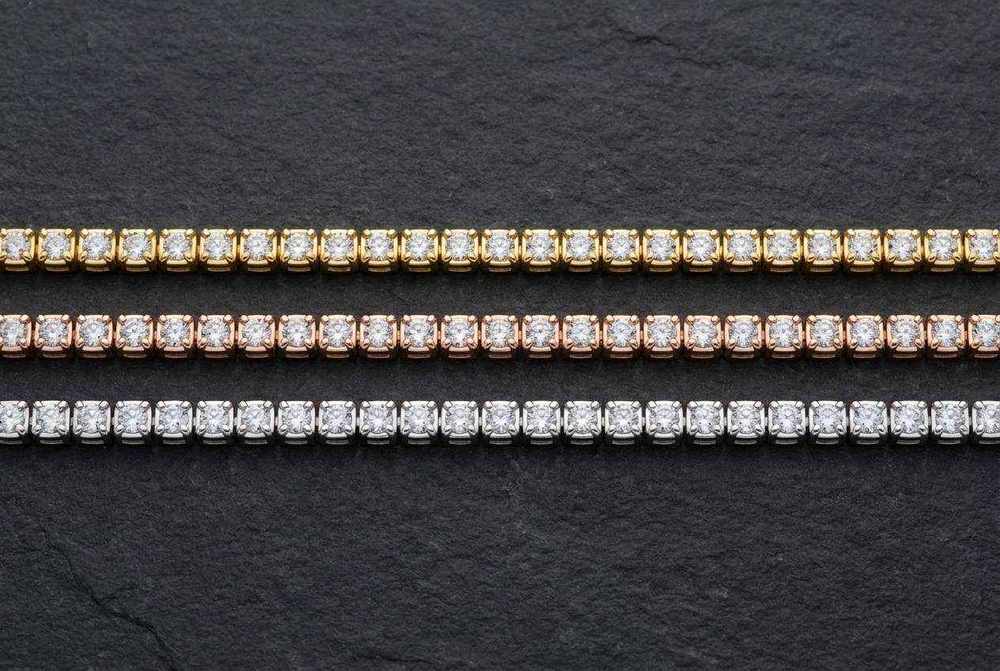
This surprises people. Bright white silver jewelry is very often finished with rhodium, a hard white metal from the platinum family, plated over the sterling. It is what gives silver that cold bright white rather than the slightly warmer grey of bare polished sterling, and it slows tarnish considerably. Our own lifetime guarantee page refers to rhodium plating as the reason tarnish is slowed on our pieces.
So plating wear is not only a gold question. The difference is how it shows. Gold wearing through on a silver base is a visible color change. Rhodium wearing through on a silver base is not, because both are white. What you notice instead is subtler: the piece looks slightly warmer and less bright than it did, and it starts tarnishing faster than it used to, because the barrier that was slowing that down has thinned.
If a silver piece you have worn for years has gone quietly duller and now needs polishing more often than it once did, that is usually what is happening. It is not damage, and it is fixable.
How long plating lasts, by piece
Friction is the whole story. Rank your jewelry by how much it rubs against things and you have ranked it by how fast the finish goes.
| Piece | Finish life | Why |
|---|---|---|
| Rings | Shortest | Rubs on hands and surfaces all day |
| Bracelets | Short | Drags on desks, sleeves, car doors |
| Chains | Long | Hangs still, light contact only |
| Pendants | Longest | Sits against fabric, barely moves |
| Studs | Longest | Touches almost nothing at all |
We are not going to attach a number of months to those rows, because an honest number does not exist. Two people wearing the same gold ring will get results years apart depending on their job, their skin, their climate and their habits. The ranking, though, holds for everyone, and it is the thing to plan around.
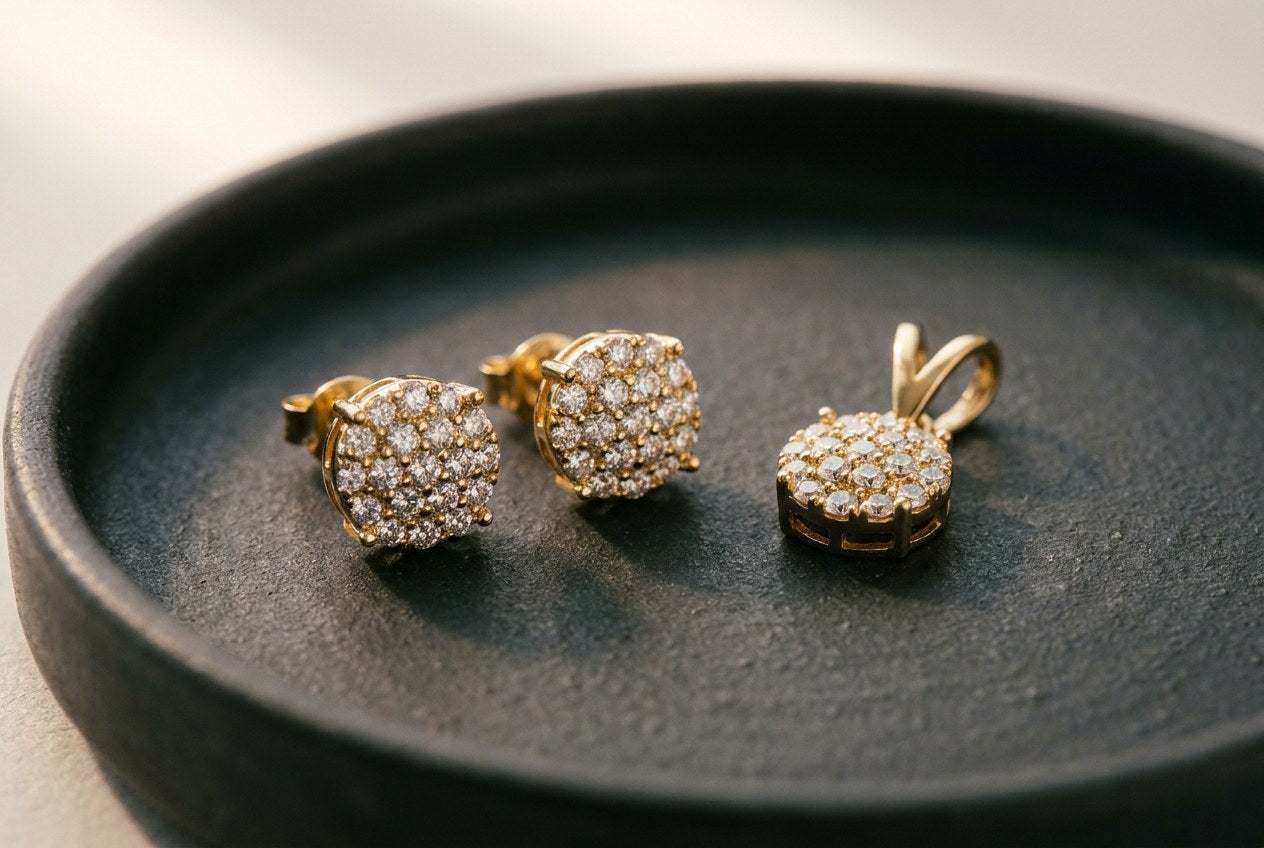
The practical takeaway: if you want a gold-finish piece you can wear without a second thought, buy it as earrings or a pendant. Our 9mm cluster studs come in a gold colorway and are about the lowest-friction thing you can own. If you want gold on your hand or wrist every single day, either accept that it will need refreshing, or talk to us about solid gold on a custom piece, where there is no layer to wear through at all.
What actually strips plating
Water is not the villain here. These five are, roughly in order of how much damage they do.
- Friction, by a wide margin. Everything else on this list is a distant second. Skin, fabric, keys, keyboards, steering wheels, gym equipment and other jewelry all abrade the surface a fraction at a time.
- Anything abrasive. Toothpaste, baking soda paste and scouring powders are far harder than a plating layer and will take it off in a single cleaning. Ultrasonic cleaners are also a bad idea on plated pieces.
- Silver polishing cloths. This one catches almost everybody, because it is the tool you are told to use on silver. A silver polishing cloth is mildly abrasive on purpose, since removing tarnish means removing a thin layer of the surface. On a plated piece the surface it removes is the plating. Use a plain soft dry cloth on anything gold or rose gold instead.
- Chlorine and household chemicals. Pool water, hot tubs, bleach and ammonia attack both the plating and the sterling underneath. This is the one exposure worth being strict about.
- Perfume, hairspray, lotion and sweat. Alcohol and oils sit on the finish and dull it, and sweat is salty and mildly acidic, which speeds up wear at contact points. None of these strips plating on its own, but all of them accelerate it.
How to make a plated finish last
None of this is complicated, and the first three do most of the work.
- Last on, first off. Jewelry goes on after perfume, hairspray, sunscreen and lotion have dried, and comes off before the gym, the pool, cleaning and bed.
- Wipe it down with a plain soft cloth at the end of the day. Ten seconds lifts the film of oils and salts before it sits overnight. Plain cloth, not a treated polishing cloth.
- Rotate your gold pieces. A finish that gets three days a week instead of seven lasts meaningfully longer, and it is free.
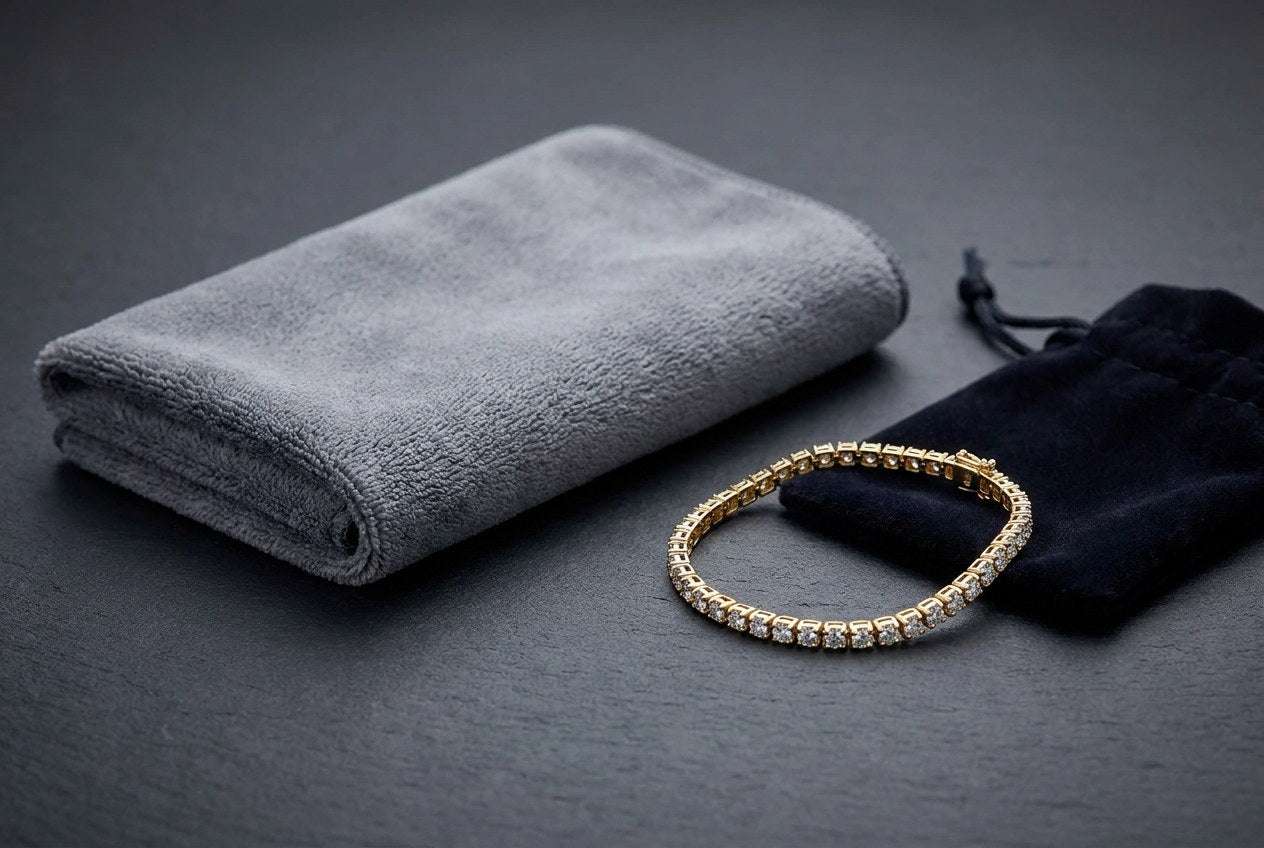
- Store pieces separately in a dry pouch. Jewelry rubbing against other jewelry in a box is friction you are not even getting to enjoy.
- Wash gently when it needs it. Warm water, one drop of mild dish soap, a soft brush behind the stones, then pat dry. No pastes, no dips, no ultrasonics.
- Keep rings out of the gym. Barbell knurling presses unevenly on a band and wears the shank faster than anything else you will do to it.
Our sterling silver care guide covers the deeper cleaning routine and the two products that quietly ruin silver, and can you wear moissanite every day goes situation by situation on showers, the gym, sleep and swimming.
What happens when it does wear
It gets re-plated. That is a routine jewelry service, not a repair, and the piece comes back looking like it did on day one because the sterling underneath was never the part that wore.
On our pieces, plating wear from normal wear is covered under the lifetime guarantee, re-plating included. Stone loss, setting or prong failure and clasp failure are covered too. Loss, theft and accident damage are not. Tarnish is treated as maintenance rather than a defect, because all silver tarnishes eventually and a cloth reverses it in a minute. If you are not sure which category yours falls into, send a photo to support and you will get an answer within a day.
That guarantee is the reason a plated finish is a reasonable thing to buy rather than a compromise. A finish that wears and can be renewed is a different proposition from one that wears and is simply gone.
Frequently asked questions
Does gold plating wear off sterling silver?
Yes. Plating is a thin surface layer and friction thins it over time, fastest on rings and bracelets and slowest on pendants and stud earrings. On a solid sterling base the metal revealed underneath is silver rather than a base metal, so a worn piece reads as two-tone rather than damaged, and it can be re-plated.
How long does gold plating last?
There is no honest single number, because it depends on the thickness of the plating, the piece, and how you wear it. The reliable guide is friction: rings wear fastest, then bracelets, then chains, with pendants and studs holding their finish longest. A piece worn a few days a week lasts considerably longer than the same piece worn daily.
Can gold plating be redone?
Yes, re-plating is a standard jewelry service and the piece comes back looking new. On Jamilah Jewels pieces, plating wear from normal wear is covered under the lifetime guarantee with re-plating included. Email support with your order number and a photo.
Does gold plated jewelry tarnish?
The gold layer itself does not tarnish, because gold does not react with air. What can happen is that the layer thins at contact points and the sterling silver underneath is exposed, and that silver tarnishes normally. So discoloration on a gold-plated piece is usually a sign the finish has worn through in that spot rather than a problem with the gold.
Is rose gold plating less durable than yellow gold?
No. The color comes from the alloy used in the plating solution, not from a different process or a thinner coat, so a rose gold finish wears at the same rate as a yellow gold one on the same piece. Choose whichever you prefer on your skin tone.
Can I use a silver polishing cloth on gold plated jewelry?
No. Silver polishing cloths are mildly abrasive by design, because removing tarnish means removing a very thin layer of surface. On a plated piece that surface is the plating. Use a plain soft dry cloth on gold and rose gold finishes, and save the treated cloth for bare sterling.
Is gold vermeil better than gold plated?
For durability, generally yes. Under the FTC Jewelry Guides, vermeil requires at least 2.5 microns of at least 10 karat gold over a sterling silver base, while plain gold electroplate can be as little as 0.175 microns. That is a substantial difference in how long the finish lasts, and the sterling base requirement means better metal underneath as well.
The short version
Gold plating wears because it is a layer, and no brand can honestly tell you otherwise. What separates a good plated piece from a bad one is what sits under the layer and whether anyone will renew it for you. Solid .925 sterling underneath means wear reveals silver instead of brass. A lifetime guarantee that includes re-plating means wear is a service appointment instead of a loss.
Finishes worth keeping
Every piece is solid .925 sterling silver set with VVS, D-color lab-created moissanite, with gold and rose gold colorways plated over that same sterling base. Free insured US shipping, 30-day returns, and a lifetime guarantee that includes re-plating.
Browse earrings, chains, bracelets and rings, or read the full material details on our FAQ page. If you want gold with nothing to wear through, start a custom inquiry and we will quote it in solid gold.
Related guides: Can You Wear Moissanite Every Day? | Does Sterling Silver Turn Your Skin Green? | How to Care for Sterling Silver | VVS Moissanite Chains | Men's Moissanite Jewelry